Catheryn Reardon

Catheryn Reardon, PhD

Assistant Teaching Professor of Psychology

AI Strategist for the Psychology Digital Immersion Programs

Arizona State University

Advancing human-centered AI, metacognitive learning,
and ethical decision-making in higher education.

Creator of HAIML (Human-Centered AI Metacognitive Learning Model)

Explore HAIML Framework →

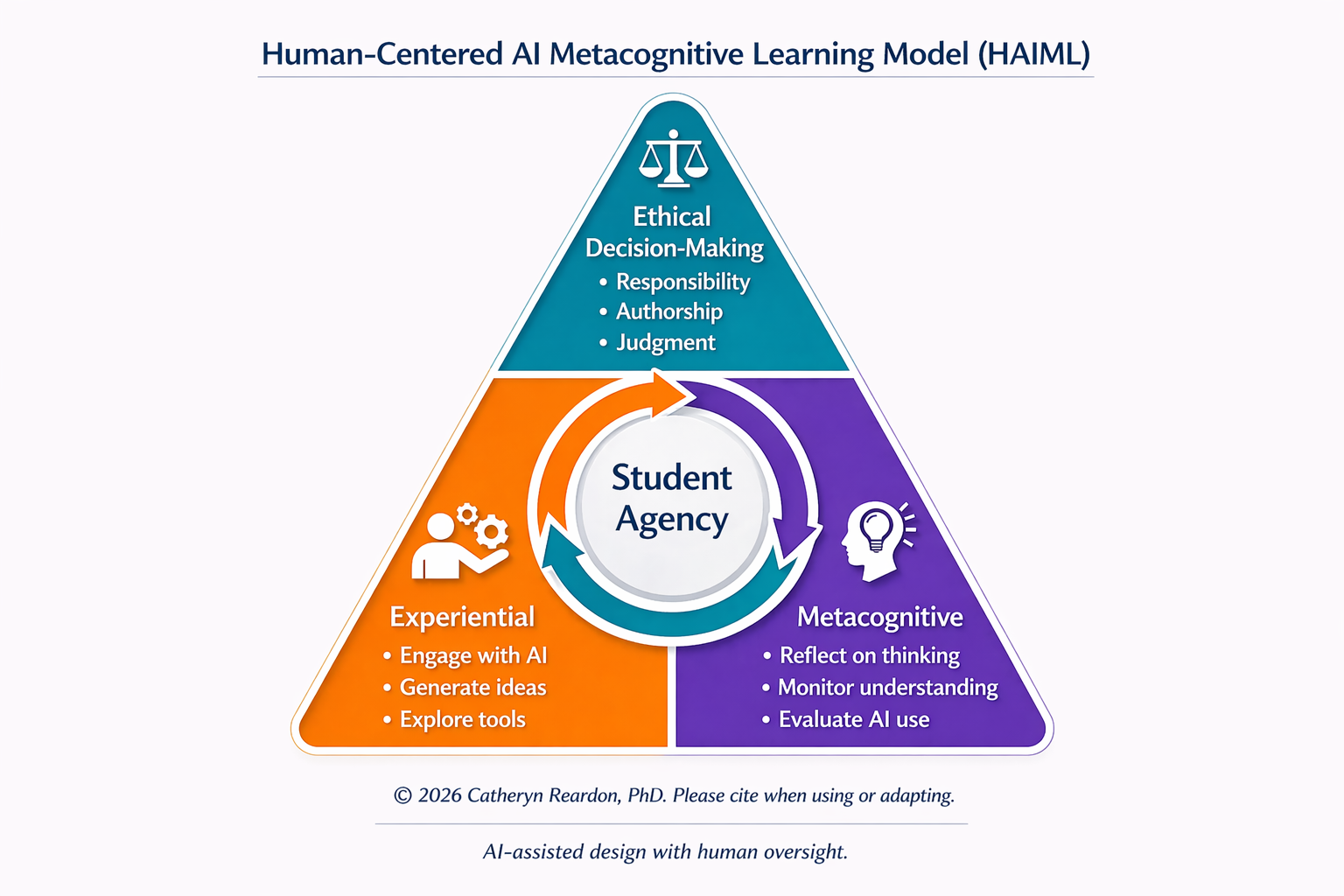
Human-Centered AI Metacognitive Learning Model (HAIML)

AI systems may remain opaque. Human judgment cannot.

The Human-Centered AI Metacognitive Learning Model (HAIML), developed by Catheryn Reardon, PhD, is a framework for learning and decision-making in an age when artificial intelligence grows more powerful and less interpretable by the day.

As AI recedes behind complexity, HAIML turns the lens inward. Rather than asking how the system works, it asks how am I thinking alongside it. The model preserves human agency, deepens metacognitive awareness, and anchors ethical responsibility where it belongs, with the person making the decision.

In this framework, students are not passive consumers of AI output. They are active, critical decision-makers, continuously evaluating when AI supports their thinking, when it distorts it, and how it quietly shapes their reasoning, confidence, and judgment over time.

HAIML reframes AI in education entirely. It is not a tool for completing tasks. It is a condition for developing the one thing no model can replicate: human judgment under uncertainty.

HAIML Framework Diagram
Learn More About HAIML

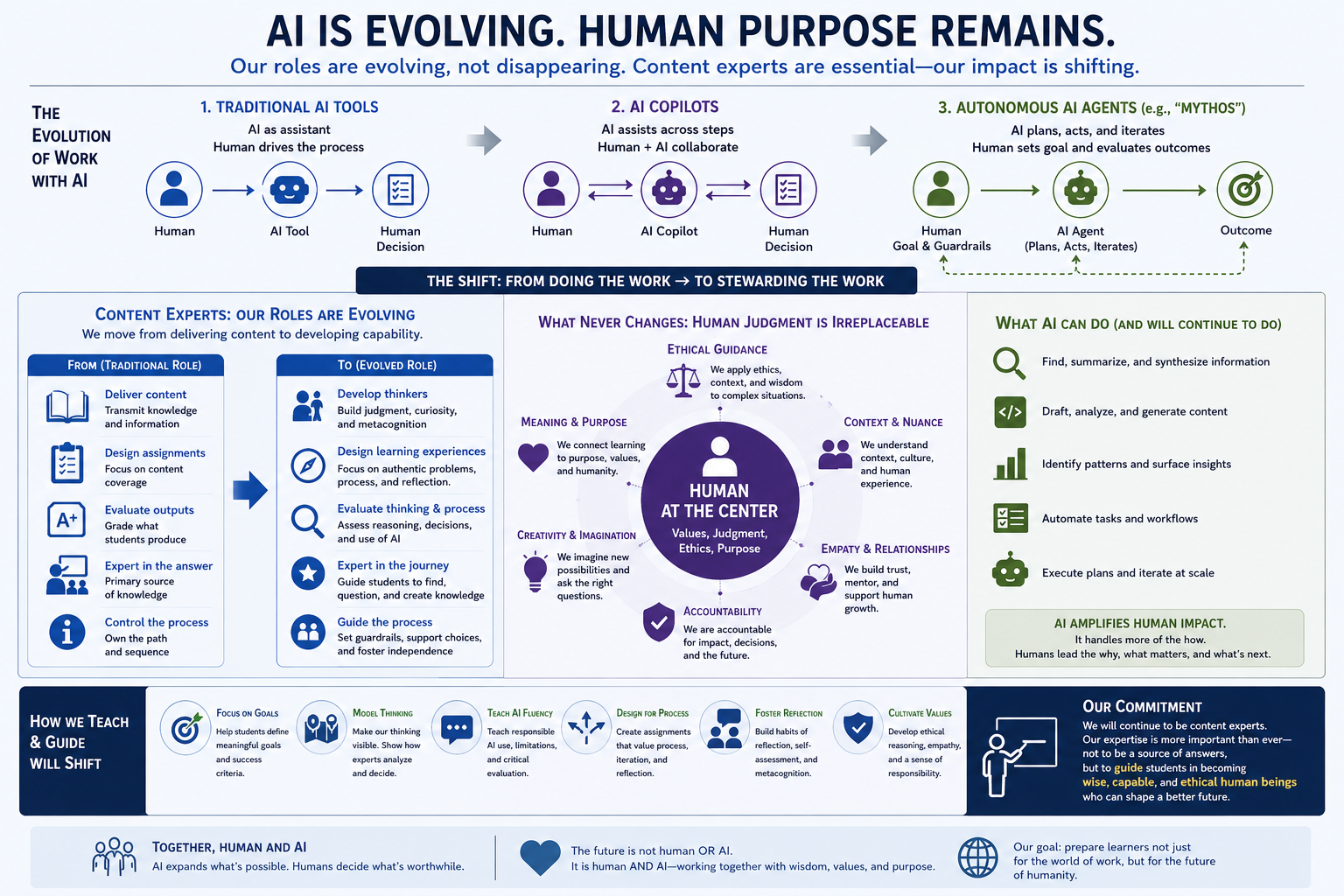
The Future of Human Learning

As AI becomes more autonomous, human expertise becomes more important, not less.

Artificial intelligence is rapidly evolving from a tool that assists human work to systems capable of planning, generating, evaluating, and increasingly acting on behalf of humans. As AI becomes more capable, the central challenge for education is no longer simply teaching students how to use AI. The greater challenge is helping learners remain thoughtful, reflective, ethical, and accountable while working alongside increasingly autonomous systems.

Content experts, educators, and researchers continue to play a critical role in this future. While AI may generate information, humans remain responsible for judgment, interpretation, ethical reasoning, and deciding what is meaningful. The role of educators is shifting from delivering information to developing thinkers.

Human Expertise in the Age of Agentic AI
View Full Graphic →

Figure 1. Human Expertise in the Age of Agentic AI. Conceptual framework and content developed by Catheryn Reardon, PhD (2026). Visual rendering created using generative AI under human direction, review, and editorial oversight. © 2026 Catheryn Reardon, PhD. All rights reserved.

Explore the Future of Human Learning →

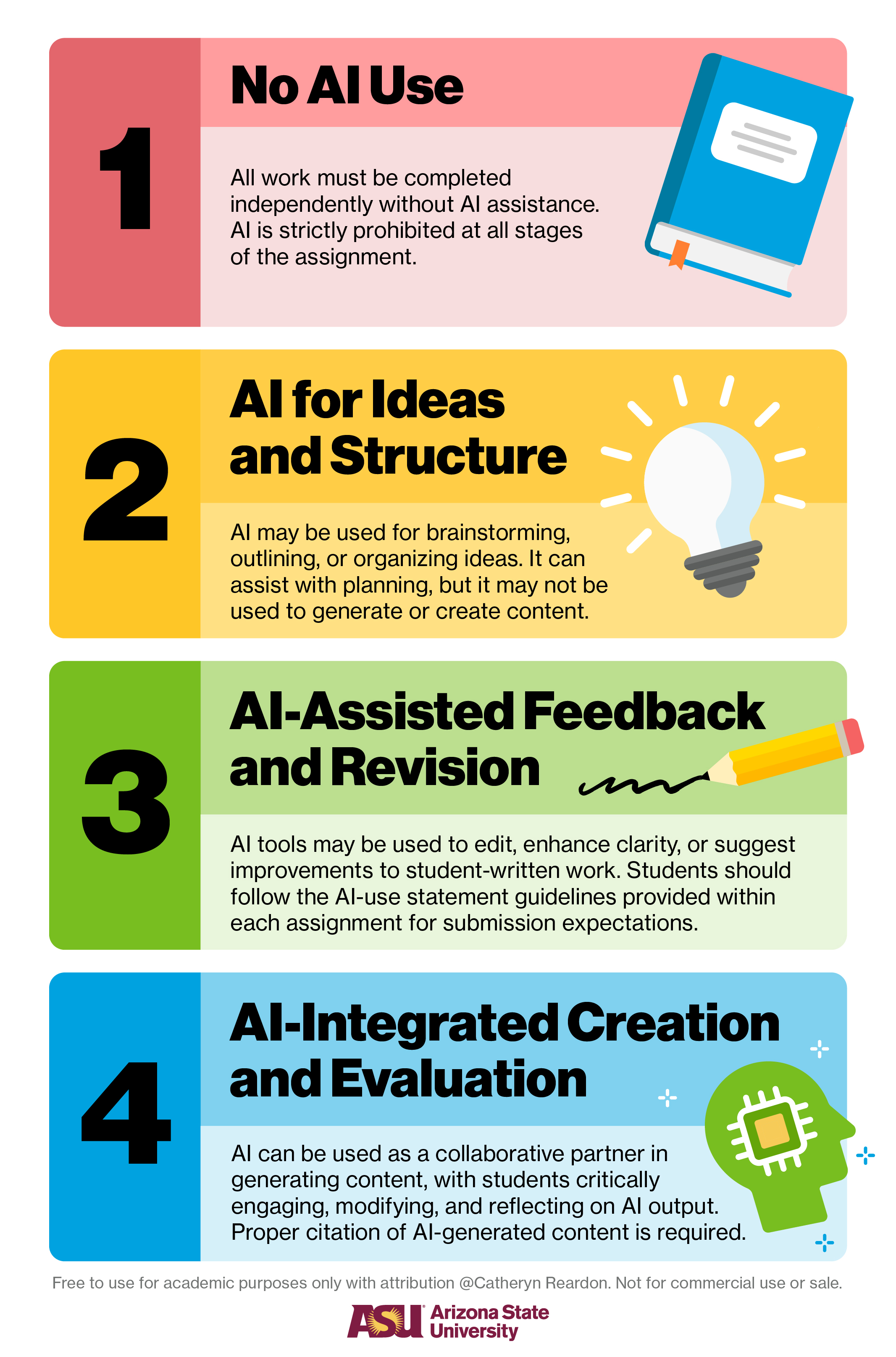
AI Use Guidelines and Ethical Framework

This framework provides a structured, human-centered approach to AI use in coursework and is informed by HAIML.

AI Guidelines Framework
View Full AI Guidelines

Purpose

This work supports the integration of AI into higher education with a focus on critical thinking, ethical awareness, and human judgment, particularly when AI systems cannot be fully understood or explained.

Research and Teaching Focus

My work focuses on human-centered AI in education, including metacognition, instructor presence, and ethical AI integration in AI-mediated learning environments.

View Research Speaking & Workshops

About

Catheryn Reardon, PhD is an Assistant Teaching Professor of Psychology at Arizona State University and AI Strategist for the Psychology Digital Immersion Programs.

Full Bio